Pilot Project X Playground: A Learning and Market-Testing Space for the New Generation of SEs, Powered by Academia and the Private Sector

Banpu Champions for Change Year 14: “Ignite & Grow Together” creates a dynamic platform

for new SEs to develop business concepts, exchange knowledge, and connect with investors.

In an era where people expect more from businesses than just profits, the Social Enterprise (SE) emerges as a powerful model. While the concept is still often misunderstood in Thailand—sometimes confused with volunteer work, local OTOP initiatives, or non-profit organizations—an SE is, in fact, a serious business venture with social problem-solving at the very core of its mission. It is more than just “considerate thoughts” or the “passion of the kind-hearted,” but rather a sustainable business model designed to strategically balance economic goals with social progress.

Although these SEs still face policy limitations and the lack of a fully supportive ecosystem, new generation of entrepreneurs don’t wait for the perfect conditions to arrive. They are taking action now, viewing “social impact” as a key performance indicator for their business, on par with profit.

Therefore, collaborative support from the government, private sector, and academia is crucial. Providing a platform for this new generation to hone their entrepreneurial skills is essential to ensuring their ventures can thrive and create lasting change.

A Local Movement Where the New Generation Drives Social Change in Local Communities

The drive for social enterprise is no longer limited to urban centers or established business leaders. The movement is now expanding to the locals, empowering individuals within local communities to take the lead.
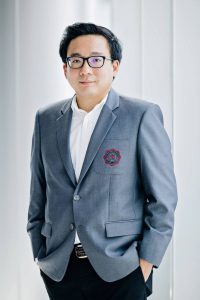
Assistant Professor Dr.Phutip Meethavornkul , Assistant Dean for Social Engagement and a Professor at the Faculty of Business Administration for Society, Srinakharinwirot University (SWU), explains, “Over the past two to three years, we’ve seen a 10-15% rise in applications to our Social Enterprise program from high school students in local communities. They arrive with a clear objective: to leverage the SE model as a tool to solve problems in their own hometowns. This phenomenon highlights a significant shift. The younger generation from these communities is moving beyond simply identifying problems to actively seeking the skills needed to solve them.”

This transformation is taking root in the classrooms of SWU, the only institution in Thailand offering a comprehensive bachelor’s degree program in Social Enterprise. The curriculum equips students with business fundamentals like marketing, finance, and accounting, alongside modern brand-building skills such as storytelling. Crucially, every subject is framed within the real-world context of social, economic, and environmental challenges.
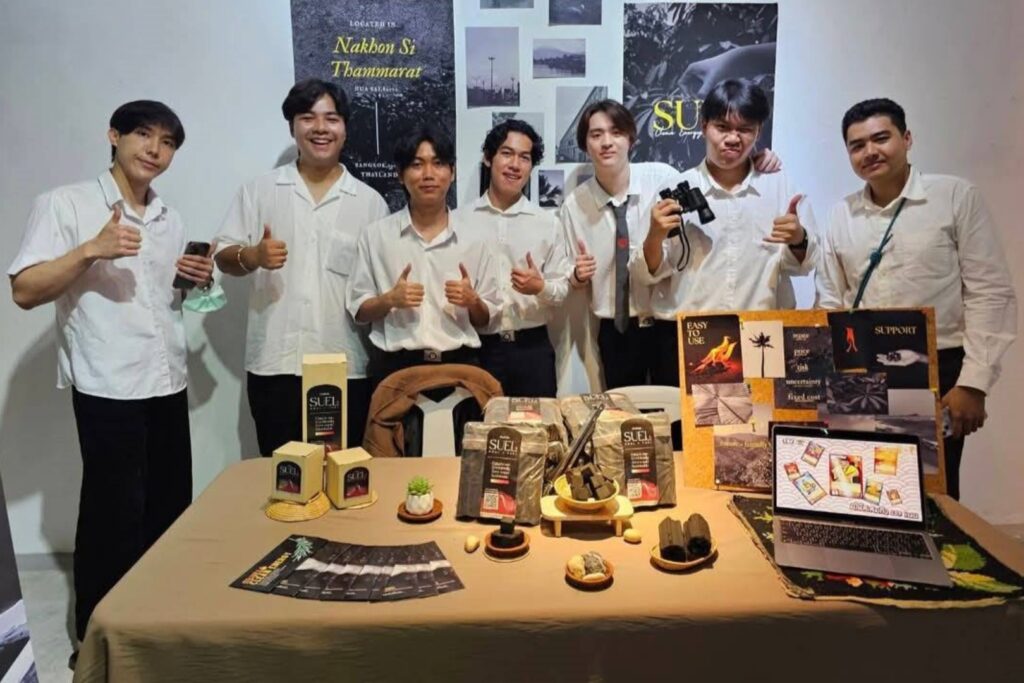
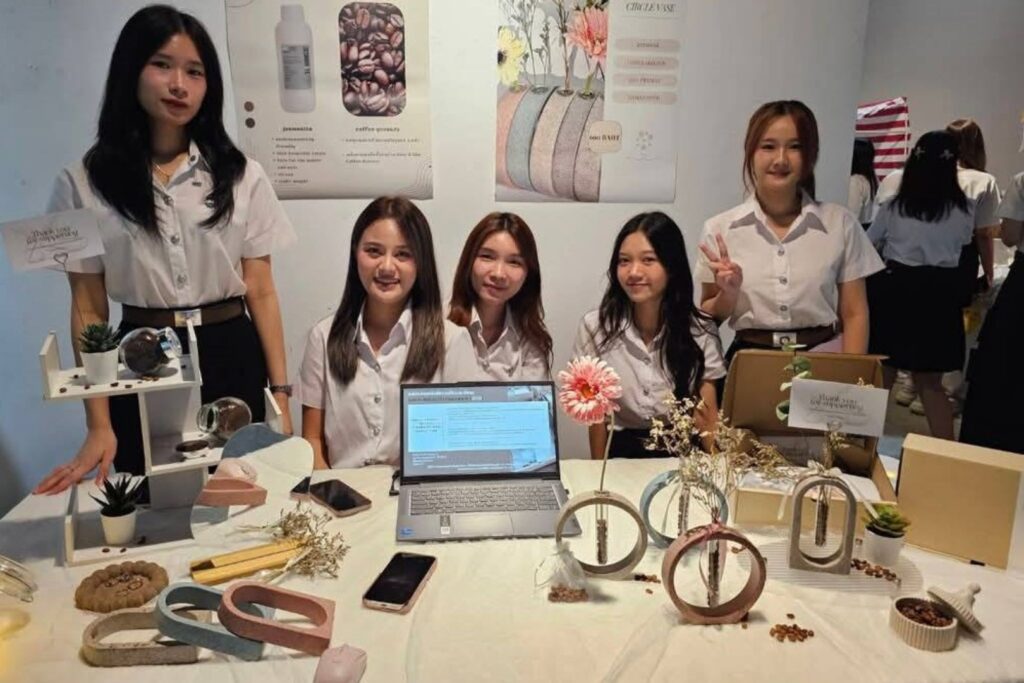
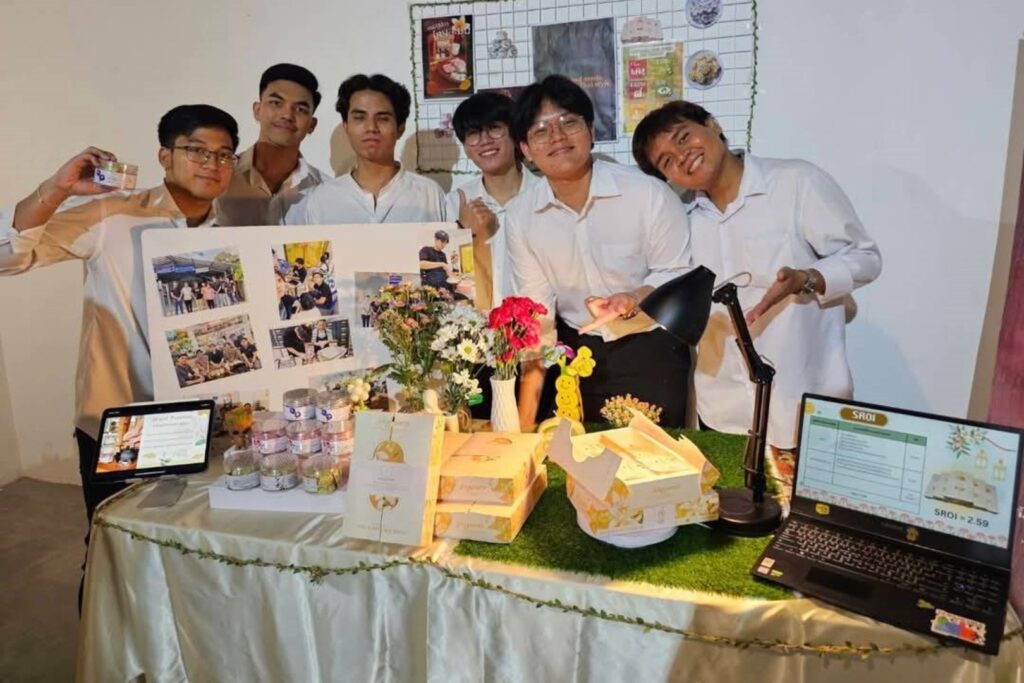
The program culminates in a final-year “Pilot Project,” where students design and launch their own SEs. This goes far beyond a theoretical model, as students must enter the field, design, test, and iterate their ideas, engage with stakeholders, and demonstrate their venture’s real-world viability and its capacity to generate income and create measurable social impact.

“I believe that the more we provide spaces for the new generation to experiment, take action, and unleash their ideas, the more new SE entrepreneurs we will see emerge. They will become a vital force in driving the grassroots economy and sustainably solving local problems.” Phutip adds.

Encouragement and Networks are Key for SEs

Drawing from his extensive experience, Dr. Phutip explains that primary causes of SE failure are dual pressures of dwindling funds and declining morale. He emphasizes that a robust, like-minded community is essential for providing both guidance and support, contributing to a stronger overall SE ecosystem. We must reshape public perception of social enterprises as sexy, disruptive, dynamic, and innovative as startups, until they become an integral part of the community. The public can play a powerful role by supporting their products and services, as the success of these ventures creates a positive ripple effect. By empowering enterprises that tackle issues like poverty, it is the same as investing in a healthier economy, a more stable society, and a sustainable environment for us and future generations. However, he cautions that this support must be paired with high standards. Holding these businesses to high standards and providing honest feedback is crucial for their genuine development and long-term success.

Banpu Champions for Change – A Space Safe Enough to Experiment and Challenging Enough to Grow

For 14 years, Banpu has supported social enterprises through its Banpu Champions for Change (BC4C) project. The initiative is built on the conviction that SE entrepreneurs are key to fostering a robust local economy and effectively addressing the distinct social challenges unique to each community.

Now in its 14th year, BC4C continues under the theme “Ignite & Grow Together,” expanding its roadshow activities to major cities in four key regions: Chiang Mai, Songkhla, Khon Kaen, and Bangkok. The program aims to identify promising SEs in local communities—those with the ideas and passion but lacking a dedicated “playground” to bring their concepts to life.

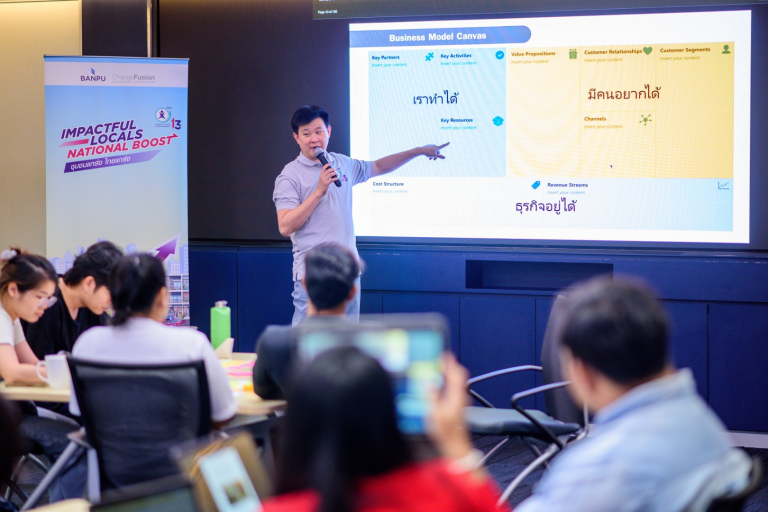
BC4C is far more than a workshop. It is a hands-on incubation program providing comprehensive training. Participants learn everything from business fundamentals—such as cost analysis and accounting—to systematic social problem-solving, including how to form hypotheses and measure social impact. The program also provides seed funding for market testing, and each team is guided by dedicated mentors—themselves experienced SE entrepreneurs—who offer expert advice and partnership throughout the entire journey.
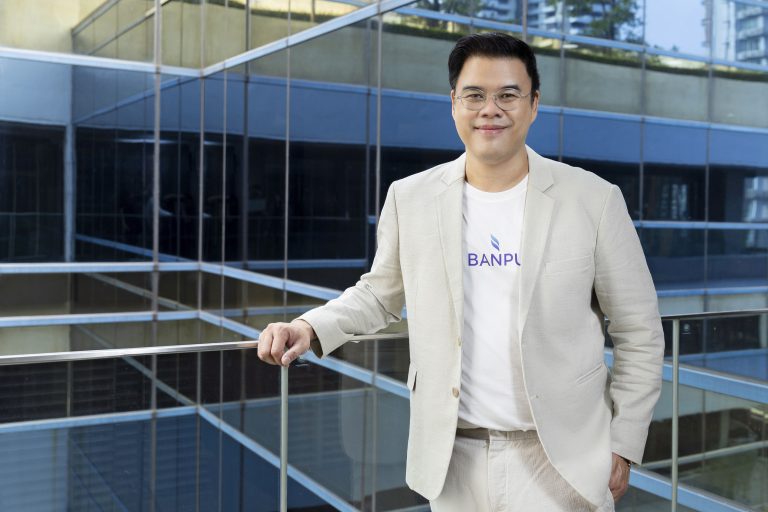
“This year, we have seen a significant increase in interest from emerging SEs in local communities. The program attracted 51 applicants from 14 provinces across the North, Central, Northeast, and South, with an average age between 20 and 30. The social issues they are most passionate about addressing include local economic resilience, employment for the disadvantaged, education, and both physical and mental health. This trend demonstrates a growing belief among local youth in the power of the social enterprise model as a sustainable solution for the challenges in their communities.” — Rattapon Sukhunthee. Head of Corporate Communications at BANPU Public Company Limited.

Follow the journey of the new social enterprises selected for the “Banpu Champions for Change: BC4C” Year 14 program, under the concept “Ignite & Grow Together,” on the Facebook fan page: www.facebook.com/banpuchampions, by phone at 087-075-4815, or via email at banpuchampions@gmail.com.


###


About Banpu

Banpu Public Company Limited is a versatile energy company, operating across three core groups of businesses – energy resources, energy generation, and energy technology – with operations in Thailand, Indonesia, China, Australia, Lao PDR, Mongolia, Japan, the United States of America, and Vietnam. The Company leads a responsible and sustainable energy transition by balancing reliable, affordable and sustainable energy.

Tags :
For more information,
Please contact Banpu Corporate
Communications Team:
Kamolwan Chiamudom

093-923-6355

kamolwan_c@banpu.co.th

Chattida Veerakul

099-104-4999

chattida_v@banpu.co.th

Solar Farm
Ponder Solar Farm
Texas

Operational

Capacity
(1Q26)

2.5
MW
Banpu Ownership : 100%
Gas-fired Power Plant (HELE/CCGT)
Temple I CCGT Power Plant
Texas

Operational

Installed
capacity
(1Q26)

768
MW
Banpu Ownership : 100%
Temple II CCGT Power Plant
Texas

Operational

Installed
capacity
(1Q26)

755
MW
Banpu Ownership : 100%
Shale Gas Site
Marcellus Shale
Pennsylvania

Operational

Reserves
(2025)

0.6
Tcfe 1P reserves
Banpu Ownership : 65.94%
Barnett Shale
Texas

Operational

Reserves
(2025)

5.5
Tcfe 1P reserves
Banpu Ownership : 65.94%
CCUS Project
Barnett Zero Project
Texas

Operational

Annual CO2
storage capacity
(2025)

183,000
t/yr
Cotton Cove Project
Texas

Operational

Annual CO2
storage capacity
(2025)

32,000
t/yr
CCUS Project
Eagle Ford Project
Southern Texas

Under Development

Annual CO2
storage capacity
(2025)

~90,000
t/yr
East Texas Project
Eastern Texas

Under Development

Annual CO2
storage capacity
(2025)

~70,000
t/yr
BESS Project
Megamouth BESS
Texas

Under Development

Capacity
(2025)

100
MW
200
MWh
Banpu Ownership : 100%
BESS Project
Iwate Tono BESS
Iwate

Operational

Capacity
(1Q26)

15
MW
58
MWh
Banpu Ownership : 75%
BESS Project
Aizu BESS
Fukushima

Under Development

Capacity
(2025)

26
MW
104
MWh
Banpu Ownership : 100%
Tsuno BESS
Miyazaki

Under Development

Capacity
(2025)

26
MW
104
MWh
Banpu Ownership : 70%
Kamigumi-Tokyo BESS
Tokyo

Under Development

Capacity
(2025)

2
MW
8
MWh
Banpu Ownership : 49%
Nikko BESS
Tochigi ​

Under Development

Capacity
(2025)

40
MW
160
MWh
Banpu Ownership : 100%
Hiyoshibaru BESS
Oita​

Under Development

Capacity
(2025)

20
MW
80
MWh
Banpu Ownership : 30%
Solar Power Plant
Olympia Solar
Gunma, Ibaraki and Tochigi

Operational

Capacity
(1Q26)

10
MW
Banpu Ownership : 40%
Yamagata Solar​
Yamagata

Operational

Capacity
(1Q26)

20
MW
Banpu Ownership : 100%
Kesennuma Solar
Miyagi

Operational

Capacity
(1Q26)

20
MW
Banpu Ownership : 100%
Shirakawa Solar​
Fukushima

Operational

Capacity
(1Q26)

10
MW
Banpu Ownership : 100%
Wind Project
Vinh Chau – Phase 1
Soc Trang Province

Under Development

Capacity
(2025)

30
MW
Banpu Ownership : 100%
Solar Power Plant
Nhon Hai Solar
Ninh Thuan Province

Operational

Capacity
(1Q26)

35
MW
Banpu Ownership : 100%
Wind Power Plant
El Wind Mui Dinh
Ninh Thuan Province

Operational

Capacity
(1Q26)

37.60
MW
Banpu Ownership : 100%
Coal Mine
Tsant Uul Mine
South Gobi Province

Operational

Production
(1Q26)

0.57
Mt

Reserves
(2025)

~63.5
Mt
Banpu Ownership : 100%
Coal Project
Unst Khudag Project
Central Gobi Province

Under Development

Reserves
(2025)

540.9
Mt
Banpu Ownership : 100%
Solar Farm
Beryl Solar Farm (BSF)
New South Wales

Operational

Capacity
(1Q26)

110.9
MW
Banpu Ownership : 100%
Manildra Solar Farm (MSF)
New South Wales

Operational

Capacity
(1Q26)

55.9
MW
Banpu Ownership : 100%
Port
NCIG Coal Terminal Port (Newcastle)

Operational

Coal export loading

Coal Mine
Airly Mine
New South Wales

Operational

Production
(1Q26)

0.1
Mt

Reserves
(2025)

13.5
Mt
Banpu Ownership : 100%
Springvale Mine
New South Wales

Operational

Production
(1Q26)

0.7
Mt

Reserves
(2025)

5.3
Mt
Banpu Ownership : 100%
Clarence Mine
New South Wales

Operational

Production
(1Q26)

0.3
Mt

Reserves
(2025)

24.7
Mt
Banpu Ownership : 100%
Mandalong Mine
New South Wales

Operational

Production
(1Q26)

0.5
Mt

Reserves
(2025)

43.9
Mt
Banpu Ownership : 100%
Myuna Mine
New South Wales

Operational

Production
(1Q26)

0.2
Mt

Reserves
(2025)

11.5
Mt
Banpu Ownership : 100%
Angus Place Mine
New South Wales

Care & Maintenance

On care & maintenance

Banpu Ownership : 100%
BESS Project
Wooreen BESS (WESS)
Latrobe Valley

Under Development

Capacity
(2025)

350
MW
1,400
MWh
Banpu Ownership : 50%
Kerang BESS
Latrobe Valley

Under Development

Capacity
(2025)

103
MW
206
MWh
Banpu Ownership : 100%
Coal Project
Newstan Extension Project
New South Wales

Under Development

Reserves
(2025)

51.5
Mt
Banpu Ownership : 100%
Neubecks Mine Project
New South Wales

Under Development

Reserves
(2025)

7.5
Mt
Banpu Ownership : 100%
Wallarah Mine Project
New South Wales

Under Development

Reserves
(2025)

7.8
Mt (equity basis)​
Banpu Ownership : 13.5%
Port
Bontang Coal Terminal
+ 4 ports

Operational

Export loading facility

Coal Project
NPR Mine Project
Central Kalimantan

Under Development

Reserves
(pre-development)

77.4
Mt
Banpu Ownership : 65.14%
Coal Mine
Indominco Mine
East Kalimantan

Operational

Production
(1Q26)

1.6
Mt

Reserves
(2025)

30.4
Mt
Banpu Ownership : 65.14%
Trubaindo Mine
East Kalimantan

Operational

Production
(1Q26)

0.7
Mt

Reserves
(2025)

50.2
Mt
Banpu Ownership : 65.14%
Bharinto Mine
North Barito

Operational

Production
(1Q26)

1.7
Mt

Reserves
(2025)

95.4
Mt
Banpu Ownership : 65.14%
Jorong Mine
South Kalimantan

Operational

Reserves
(2025)

2.3
Mt
Banpu Ownership : 65.14%
Graha Panca Karsa Mine (GPK)
East Kalimantan

Operational

Production
(1Q26)

0.5
Mt

Reserves
(2025)

99.1
Mt
Banpu Ownership : 65.14%
TIS Mine
East Kalimantan

Operational

Production
(1Q26)

0.1
Mt

Reserves
(2025)

7.2
Mt
Banpu Ownership : 65.14%
NPR Mine

Operational

Production
(1Q26)

0.1
Mt

Reserves
(2025)

77.4
Mt
Banpu Ownership : 65.14%
Thermal Power Plant
Hongsa Power Plant – HPC
Xayaboury Province

Operational

Installed Capacity
(1Q26)

1,878
MW
Banpu Ownership : 40%
Thermal Power Plant
BLCP Power Plant
Rayong Province

Operational

Installed Capacity
(1Q26)

1,434
MW
Banpu Ownership : 50%
Solar Project
Jinhu Qianfeng Solar
Jiangsu Province

Under Development

Capacity
(2025)

120
MW
Banpu Ownership : 10%
BESS Project
Jinhu Qianfeng BESS
Jiangsu Province

Under Development

Capacity
(2025)

10
MW
20
MWh
Banpu Ownership : 100%
Thermal Power Plants
Luannan CHP
Hebei Province

Operational

Capacity
(1Q26)

246
MW

Steam
(1Q26)

538
t/hr​
Banpu Ownership : 100%
Zhengding CHP
Hebei Province

Operational

Capacity
(1Q26)

139
MW

Steam
(1Q26)

370
t/hr​
Banpu Ownership : 100%
Zouping CHP
Shandong Province

Operational

Capacity
(1Q26)

223
MW

Steam
(1Q26)

600
t/hr​
Banpu Ownership : 70%
Shanxi Lu Guang (SLG) Power Plant​
Shanxi Province

Operational

Capacity
(1Q26)

1,320
MW
Banpu Ownership : 30%
Solar Power Plant
Huineng Solar
Shandong Province

Operational

Capacity
(1Q26)

21.51
MW
Banpu Ownership : 100%
Jinshan Solar
Shandong Province

Operational

Capacity
(1Q26)

28.95
MW
Banpu Ownership : 100%
Haoyuan Solar
Shandong Province

Operational

Capacity
(1Q26)

20.00
MW
Banpu Ownership : 100%
Hui'en Solar
Shandong Province

Operational

Capacity
(1Q26)

19.70
MW
Banpu Ownership : 100%
Deyuan Solar
Zhejiang Province

Operational

Capacity
(1Q26)

51.64
MW
Banpu Ownership : 100%
Xingyu Solar
Shandong Province

Operational

Capacity
(1Q26)

10.30
MW
Banpu Ownership : 100%
Jixin Solar
Jiangsu Province

Operational

Capacity
(1Q26)

25.22
MW
Banpu Ownership : 100%
Coal Mine
Gaohe Mine
Shanxi Province

Operational

Production
(1Q26)

2.6
Mt

Reserves
(2025)

72.9
Mt
Banpu Ownership : 45%
Hebi Mine
Henan Province

Operational

Production
(1Q26)

0.3
Mt

Reserves
(2025)

40.6
Mt
Banpu Ownership : 40%

IR Contacts