
Banpu’s Greener & Smarter Growth Strategy: Why Vietnam?

Vietnam is among the fastest-growing economies in the world despite the headwinds created by the ongoing COVID-19 pandemic, with remarkable GDP growth of 2.58% in 2021 and anticipated growth of 6.80% in 2022.  Moreover, the country has excellent potential for renewable energy deployment, with currently the highest expansion rate of renewables capacity in the ASEAN region. Given these facts, Vietnam has become an ideal destination for investors from various industries from around the world, including Thailand, to set up their manufacturing base over the recent years.

Foreseeing that Vietnam is one of  the key strategic markets for investment and expansion of greener energy portfolio in line with global energy trends, Banpu, a leading international versatile energy provider, has capitalized on the country’s long-term growth potential as part of the Company’s direction under the Greener & Smarter strategy in order to accelerate its business transformation towards Smarter Energy for Sustainability. Over the past two years, Baupu has invested in a total of 5 wind and solar power plants with a combined total capacity of 218 MW.

“Our substantial investment expansion in renewable energy in Vietnam over the recent two years is just the right timing,” said Somruedee Chaimongkol, Banpu’s Chief Executive Officer.  “Vietnam is not only one of the world’s fastest-growing emerging markets, but also among the countries with the highest growth rate of green energy development. Renewable energy ambition of the Vietnamese government is simply in line with Banpu’s strategic direction in strengthening green energy assets across different regions and complements our existing business ecosystem in the key markets we operate around the world.”

Over the years Vietnam has been a highly attractive market for foreign investors thanks to its competitive labor cost, supportive policies from the government, as well as the country’s constantly expanding export sector. Exports from Vietnam to the U.S. in the first half of 2021 increased 42.6%, reflecting Vietnam’s robust economic growth. Increasing investment in infrastructure development has also led to hiking demand for electricity, resulting in fast-growing energy sector, especially that generated from renewable sources, which is central to Vietnam government’s sustainable energy agenda.
Geographic location advantage and government support

In 2021, the government of Vietnam released the draft of Power Development Plan 8 (PDP 8), for 2021 to 2030 with the determination to increase solar capacity to 18.6 GW and wind capacity to 11.82 GW, boosting its power output produced by renewable energy to 23% by 2030. The ambition is attainable thanks to the country’s geographic location with high proportion of land area nationwide with high average solar intensity and more than 3,000 kms of coastlines with consistent wind speeds throughout the year.

Vietnam is one of the strategic markets for Banpu’s long-term growth potential due to the clear policy from the country’s government to support foreign investment and green energy development.  Meanwhile, the country’s transition to implementation of auction scheme for electricity trading might be another milestone for Banpu to expand business there. However, in recent years, Banpu has established strong business fundamentals in Vietnam with investments in various renewable energy assets, which significantly enhances the Company’s competitive edge in bidding for new power plants in the future.

Expertise in energy business – Banpu’s key competitive edge

In the future, Vietnam is increasingly transforming the country’s energy business from centralized to decentralized, advocating private sector-led approach to electricity development with aim to create competition for the best benefits for the government and selling price of electricity for consumers. This gives Banpu competitive advantage in investing and growing business in Vietnam due to the Company’s extensive experience in energy industry landscape in the countries with advanced energy trading schemes like the United States, Australia or Japan, where energy trading platform and spot market trading are pervasively implemented.

Constant investment in Vietnam is part of Banpu’s strategic transition towards greener energy and helps enhance the Company’s business ecosystem. Banpu has currently acquired 5 renewable energy projects, comprising 2 wind farms and 3 solar power plants.
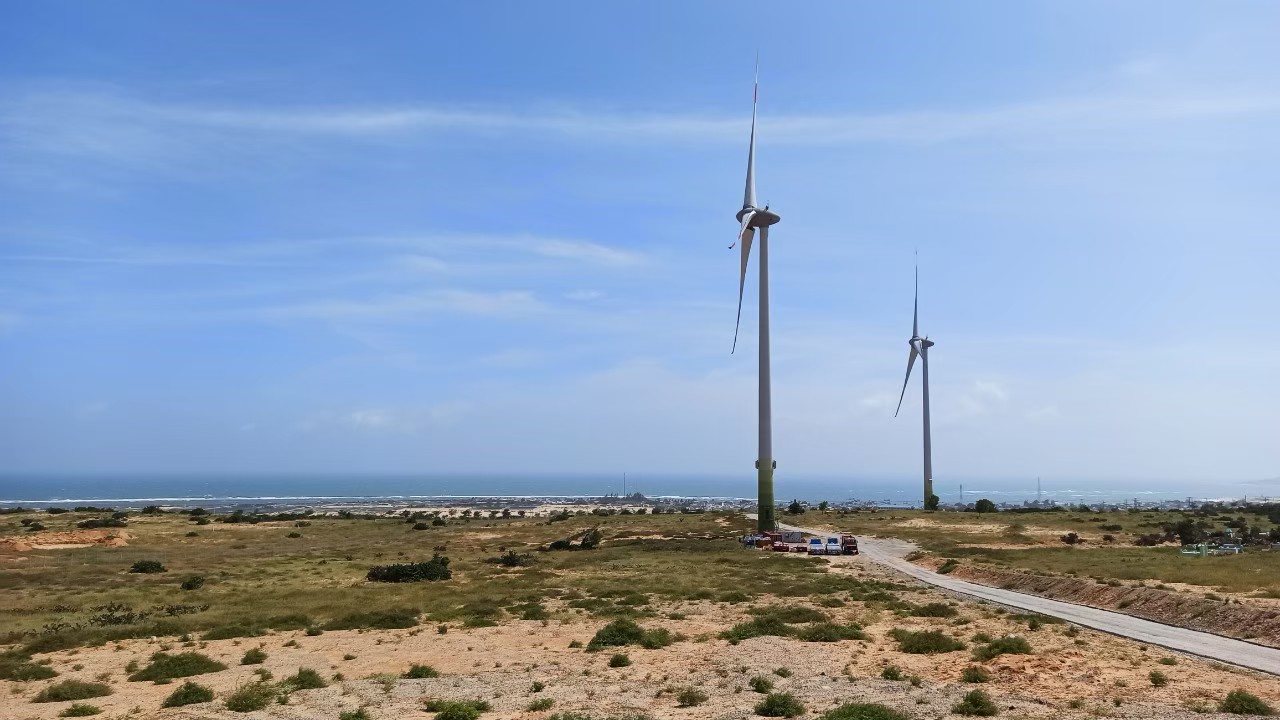
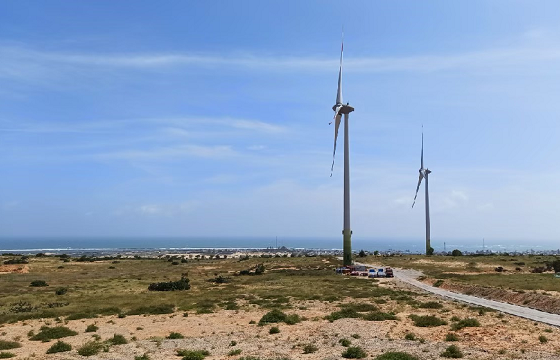
Banpu’s first wind energy asset in Vietnam is the 38 MW El Wind Mui Dinh Wind Farm,  which generated immediate income for the Company as its commercial operation has started since April 2019. The wind farm is located in Ninh Thuan Province, Vietnam’s hub for renewable energy resources from where 80% of the nation’s renewable power is generated. Another wind asset is Vinh Chau Wind Farm Phase 1, with a capacity of 30 MW, now under construction with plan for commercial operation in Q1 2022; and Vinh Chau Wind Farm Phase 2 and Phase 3, with a capacity of 50 MW, currently under feasibility study for project development to support the Vietnamese government’s new electricity trading scheme.
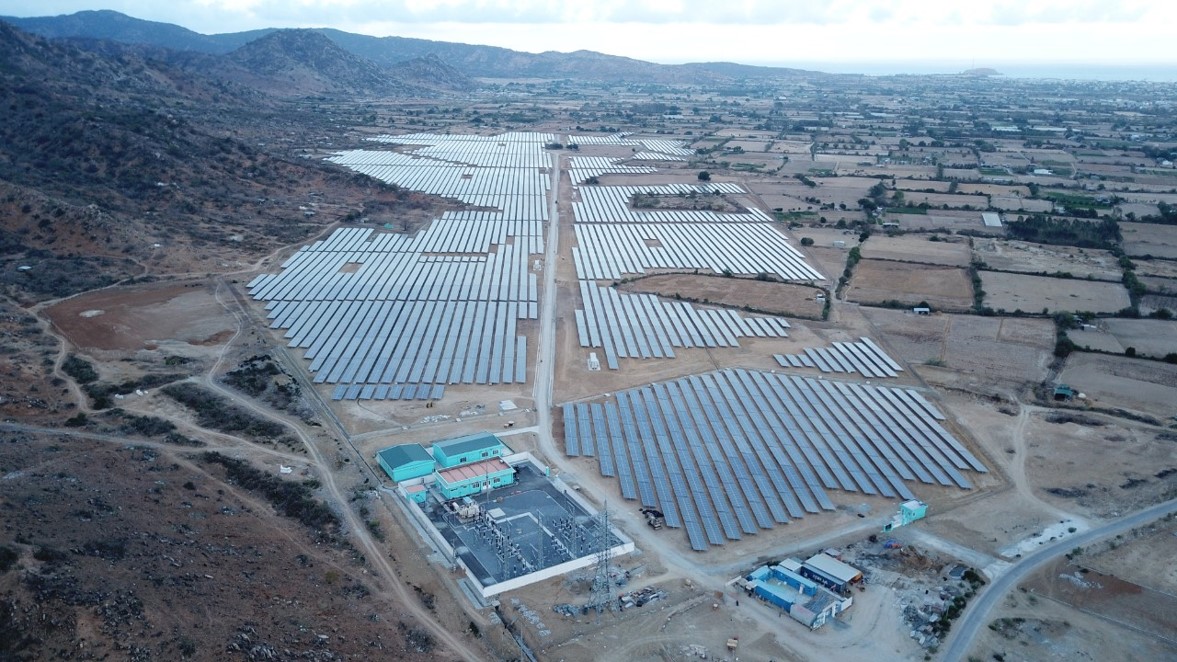
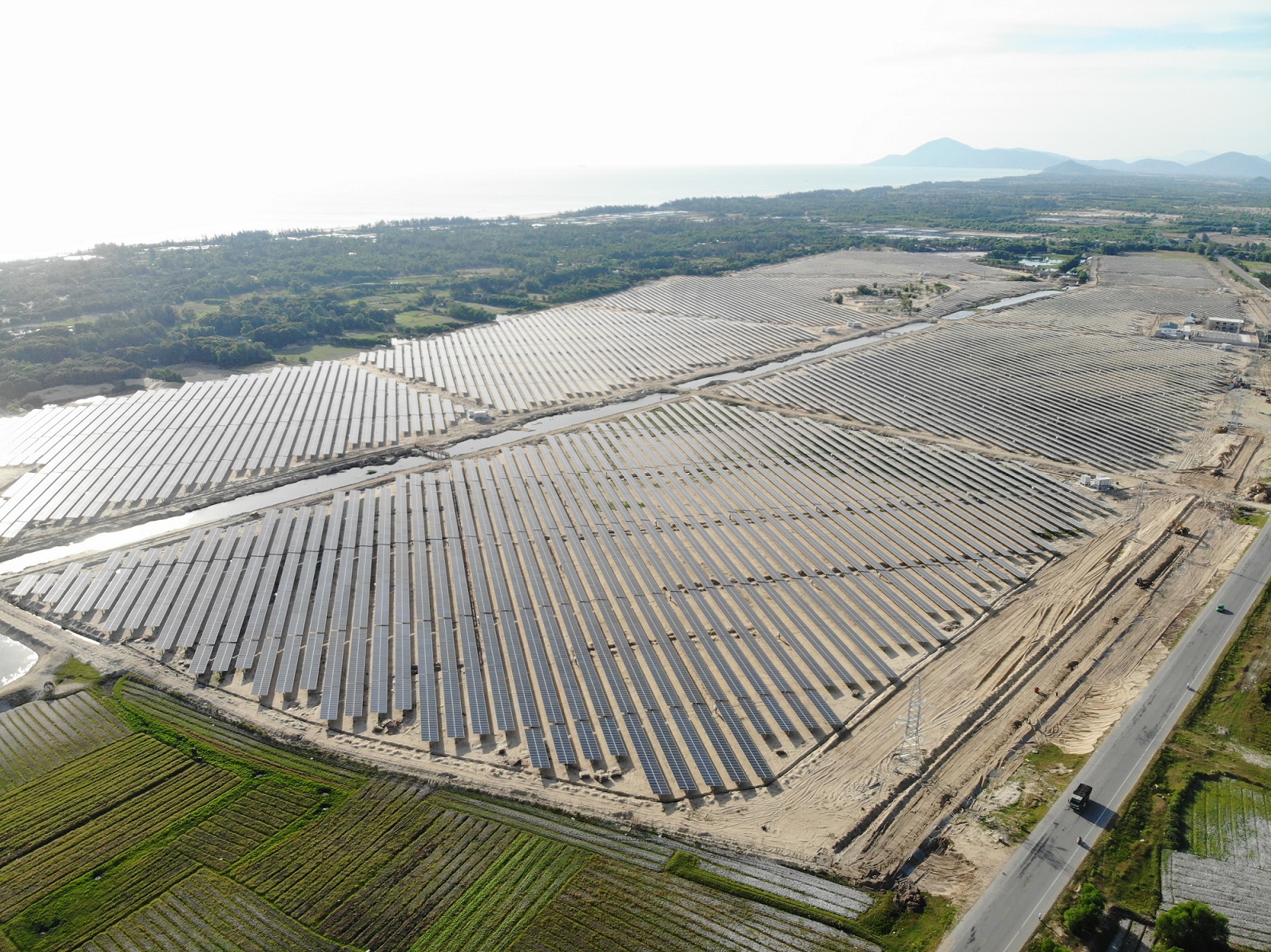
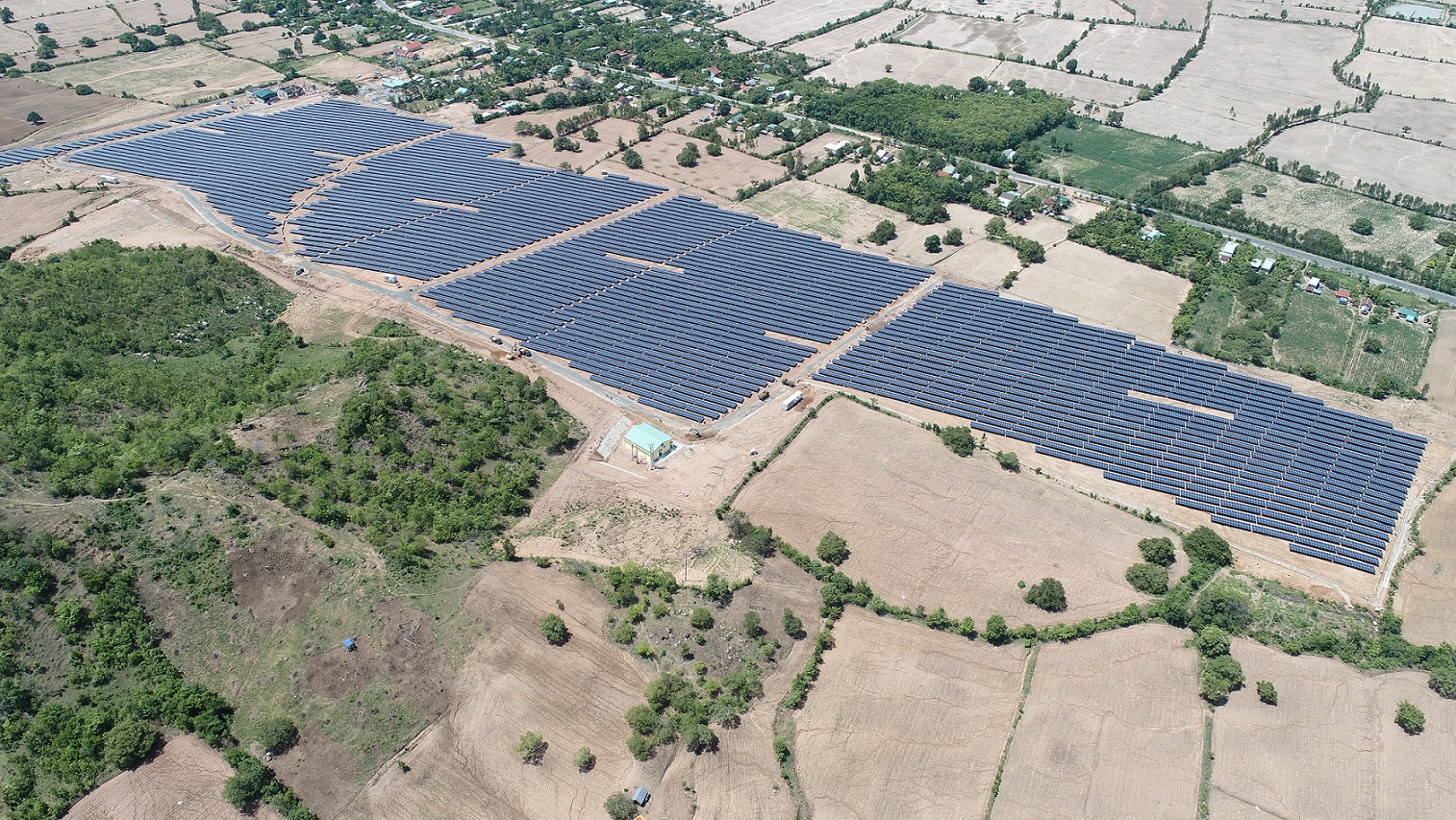
The Company’s first solar power asset in Vietnam is the 50 MW Ha Tinh Solar Farm, a large power plant in the north central coast of the country with commercial operation since June 2019.  The other two are Chu Ngoc Solar Farm in Gia Lai Province, with a capacity of 15 MW and commercial operation since June 2019; and Nhon Hai Solar Farm in Ninh Thuan Province, with a capacity of 35 MW and commercial operations since July 2020. The three solar power plants generate instant income to Banpu since they have been fully operational and are entitled to attractive Feed-in-Tariff (FIT). They also provide the Company with long-term income stream as they all supply electricity through the national grid system under a Power Purchase Agreement (PPA) with Vietnam Electricity (EVN) for a period of 20 years.

Banpu will continue to pursue new growth opportunities in Vietnam, as part of the Company’s ambition to accelerate the transition towards Smarter Energy for Sustainability under its Greener & Smarter strategy as well as to strengthen its energy ecosystem. The Company also explores investment opportunities in all 10 countries where it operates as well as other new markets with high growth potential, with investment focus on projects that can generate immediate cash flow. This is to achieve the growth target under energy generation business of 6,100 MW, in which not less than 20% generated by renewable energy sources, in 2025.

Banpu is committed to creating a balance between economic growth and environmental sustainability, with strong adherence to ESG (Environmental, Social and Governance) principles, as well as being a good corporate citizen wherever the Company operates, all while creating sustainable value to all its stakeholders.

###

About Banpu

Banpu Public Company Limited is an international versatile energy provider, operating three core groups of businesses – energy resources, energy generation and energy technology in 10 countries:  Thailand, Indonesia, China, Australia, Lao PDR, Mongolia, Singapore, Japan, the United States of America and Vietnam.

Tags :
For more information,
Please contact Banpu Corporate
Communications Team:
Ornsiri Vorayos

02-694-6923

ornsiri_v@banpu.co.th

Thanatchaporn Rangsinturat 

02-694-6784

thanatchaporn_r@banpu.co.th

Solar Farm
Ponder Solar Farm
Texas

Operational

Capacity
(1Q26)

2.5
MW
Banpu Ownership : 100%
Gas-fired Power Plant (HELE/CCGT)
Temple I CCGT Power Plant
Texas

Operational

Installed
capacity
(1Q26)

768
MW
Banpu Ownership : 100%
Temple II CCGT Power Plant
Texas

Operational

Installed
capacity
(1Q26)

755
MW
Banpu Ownership : 100%
Shale Gas Site
Marcellus Shale
Pennsylvania

Operational

Reserves
(2025)

0.6
Tcfe 1P reserves
Banpu Ownership : 65.94%
Barnett Shale
Texas

Operational

Reserves
(2025)

5.5
Tcfe 1P reserves
Banpu Ownership : 65.94%
CCUS Project
Barnett Zero Project
Texas

Operational

Annual CO2
storage capacity
(2025)

183,000
t/yr
Cotton Cove Project
Texas

Operational

Annual CO2
storage capacity
(2025)

32,000
t/yr
CCUS Project
Eagle Ford Project
Southern Texas

Under Development

Annual CO2
storage capacity
(2025)

~90,000
t/yr
East Texas Project
Eastern Texas

Under Development

Annual CO2
storage capacity
(2025)

~70,000
t/yr
BESS Project
Megamouth BESS
Texas

Under Development

Capacity
(2025)

100
MW
200
MWh
Banpu Ownership : 100%
BESS Project
Iwate Tono BESS
Iwate

Operational

Capacity
(1Q26)

15
MW
58
MWh
Banpu Ownership : 75%
BESS Project
Aizu BESS
Fukushima

Under Development

Capacity
(2025)

26
MW
104
MWh
Banpu Ownership : 100%
Tsuno BESS
Miyazaki

Under Development

Capacity
(2025)

26
MW
104
MWh
Banpu Ownership : 70%
Kamigumi-Tokyo BESS
Tokyo

Under Development

Capacity
(2025)

2
MW
8
MWh
Banpu Ownership : 49%
Nikko BESS
Tochigi ​

Under Development

Capacity
(2025)

40
MW
160
MWh
Banpu Ownership : 100%
Hiyoshibaru BESS
Oita​

Under Development

Capacity
(2025)

20
MW
80
MWh
Banpu Ownership : 30%
Solar Power Plant
Olympia Solar
Gunma, Ibaraki and Tochigi

Operational

Capacity
(1Q26)

10
MW
Banpu Ownership : 40%
Yamagata Solar​
Yamagata

Operational

Capacity
(1Q26)

20
MW
Banpu Ownership : 100%
Kesennuma Solar
Miyagi

Operational

Capacity
(1Q26)

20
MW
Banpu Ownership : 100%
Shirakawa Solar​
Fukushima

Operational

Capacity
(1Q26)

10
MW
Banpu Ownership : 100%
Wind Project
Vinh Chau – Phase 1
Soc Trang Province

Under Development

Capacity
(2025)

30
MW
Banpu Ownership : 100%
Solar Power Plant
Nhon Hai Solar
Ninh Thuan Province

Operational

Capacity
(1Q26)

35
MW
Banpu Ownership : 100%
Wind Power Plant
El Wind Mui Dinh
Ninh Thuan Province

Operational

Capacity
(1Q26)

37.60
MW
Banpu Ownership : 100%
Coal Mine
Tsant Uul Mine
South Gobi Province

Operational

Production
(1Q26)

0.57
Mt

Reserves
(2025)

~63.5
Mt
Banpu Ownership : 100%
Coal Project
Unst Khudag Project
Central Gobi Province

Under Development

Reserves
(2025)

540.9
Mt
Banpu Ownership : 100%
Solar Farm
Beryl Solar Farm (BSF)
New South Wales

Operational

Capacity
(1Q26)

110.9
MW
Banpu Ownership : 100%
Manildra Solar Farm (MSF)
New South Wales

Operational

Capacity
(1Q26)

55.9
MW
Banpu Ownership : 100%
Port
NCIG Coal Terminal Port (Newcastle)

Operational

Coal export loading

Coal Mine
Airly Mine
New South Wales

Operational

Production
(1Q26)

0.1
Mt

Reserves
(2025)

13.5
Mt
Banpu Ownership : 100%
Springvale Mine
New South Wales

Operational

Production
(1Q26)

0.7
Mt

Reserves
(2025)

5.3
Mt
Banpu Ownership : 100%
Clarence Mine
New South Wales

Operational

Production
(1Q26)

0.3
Mt

Reserves
(2025)

24.7
Mt
Banpu Ownership : 100%
Mandalong Mine
New South Wales

Operational

Production
(1Q26)

0.5
Mt

Reserves
(2025)

43.9
Mt
Banpu Ownership : 100%
Myuna Mine
New South Wales

Operational

Production
(1Q26)

0.2
Mt

Reserves
(2025)

11.5
Mt
Banpu Ownership : 100%
Angus Place Mine
New South Wales

Care & Maintenance

On care & maintenance

Banpu Ownership : 100%
BESS Project
Wooreen BESS (WESS)
Latrobe Valley

Under Development

Capacity
(2025)

350
MW
1,400
MWh
Banpu Ownership : 50%
Kerang BESS
Latrobe Valley

Under Development

Capacity
(2025)

103
MW
206
MWh
Banpu Ownership : 100%
Coal Project
Newstan Extension Project
New South Wales

Under Development

Reserves
(2025)

51.5
Mt
Banpu Ownership : 100%
Neubecks Mine Project
New South Wales

Under Development

Reserves
(2025)

7.5
Mt
Banpu Ownership : 100%
Wallarah Mine Project
New South Wales

Under Development

Reserves
(2025)

7.8
Mt (equity basis)​
Banpu Ownership : 13.5%
Port
Bontang Coal Terminal
+ 4 ports

Operational

Export loading facility

Coal Project
NPR Mine Project
Central Kalimantan

Under Development

Reserves
(pre-development)

77.4
Mt
Banpu Ownership : 65.14%
Coal Mine
Indominco Mine
East Kalimantan

Operational

Production
(1Q26)

1.6
Mt

Reserves
(2025)

30.4
Mt
Banpu Ownership : 65.14%
Trubaindo Mine
East Kalimantan

Operational

Production
(1Q26)

0.7
Mt

Reserves
(2025)

50.2
Mt
Banpu Ownership : 65.14%
Bharinto Mine
North Barito

Operational

Production
(1Q26)

1.7
Mt

Reserves
(2025)

95.4
Mt
Banpu Ownership : 65.14%
Jorong Mine
South Kalimantan

Operational

Reserves
(2025)

2.3
Mt
Banpu Ownership : 65.14%
Graha Panca Karsa Mine (GPK)
East Kalimantan

Operational

Production
(1Q26)

0.5
Mt

Reserves
(2025)

99.1
Mt
Banpu Ownership : 65.14%
TIS Mine
East Kalimantan

Operational

Production
(1Q26)

0.1
Mt

Reserves
(2025)

7.2
Mt
Banpu Ownership : 65.14%
NPR Mine

Operational

Production
(1Q26)

0.1
Mt

Reserves
(2025)

77.4
Mt
Banpu Ownership : 65.14%
Thermal Power Plant
Hongsa Power Plant – HPC
Xayaboury Province

Operational

Installed Capacity
(1Q26)

1,878
MW
Banpu Ownership : 40%
Thermal Power Plant
BLCP Power Plant
Rayong Province

Operational

Installed Capacity
(1Q26)

1,434
MW
Banpu Ownership : 50%
Solar Project
Jinhu Qianfeng Solar
Jiangsu Province

Under Development

Capacity
(2025)

120
MW
Banpu Ownership : 10%
BESS Project
Jinhu Qianfeng BESS
Jiangsu Province

Under Development

Capacity
(2025)

10
MW
20
MWh
Banpu Ownership : 100%
Thermal Power Plants
Luannan CHP
Hebei Province

Operational

Capacity
(1Q26)

246
MW

Steam
(1Q26)

538
t/hr​
Banpu Ownership : 100%
Zhengding CHP
Hebei Province

Operational

Capacity
(1Q26)

139
MW

Steam
(1Q26)

370
t/hr​
Banpu Ownership : 100%
Zouping CHP
Shandong Province

Operational

Capacity
(1Q26)

223
MW

Steam
(1Q26)

600
t/hr​
Banpu Ownership : 70%
Shanxi Lu Guang (SLG) Power Plant​
Shanxi Province

Operational

Capacity
(1Q26)

1,320
MW
Banpu Ownership : 30%
Solar Power Plant
Huineng Solar
Shandong Province

Operational

Capacity
(1Q26)

21.51
MW
Banpu Ownership : 100%
Jinshan Solar
Shandong Province

Operational

Capacity
(1Q26)

28.95
MW
Banpu Ownership : 100%
Haoyuan Solar
Shandong Province

Operational

Capacity
(1Q26)

20.00
MW
Banpu Ownership : 100%
Hui'en Solar
Shandong Province

Operational

Capacity
(1Q26)

19.70
MW
Banpu Ownership : 100%
Deyuan Solar
Zhejiang Province

Operational

Capacity
(1Q26)

51.64
MW
Banpu Ownership : 100%
Xingyu Solar
Shandong Province

Operational

Capacity
(1Q26)

10.30
MW
Banpu Ownership : 100%
Jixin Solar
Jiangsu Province

Operational

Capacity
(1Q26)

25.22
MW
Banpu Ownership : 100%
Coal Mine
Gaohe Mine
Shanxi Province

Operational

Production
(1Q26)

2.6
Mt

Reserves
(2025)

72.9
Mt
Banpu Ownership : 45%
Hebi Mine
Henan Province

Operational

Production
(1Q26)

0.3
Mt

Reserves
(2025)

40.6
Mt
Banpu Ownership : 40%

IR Contacts