
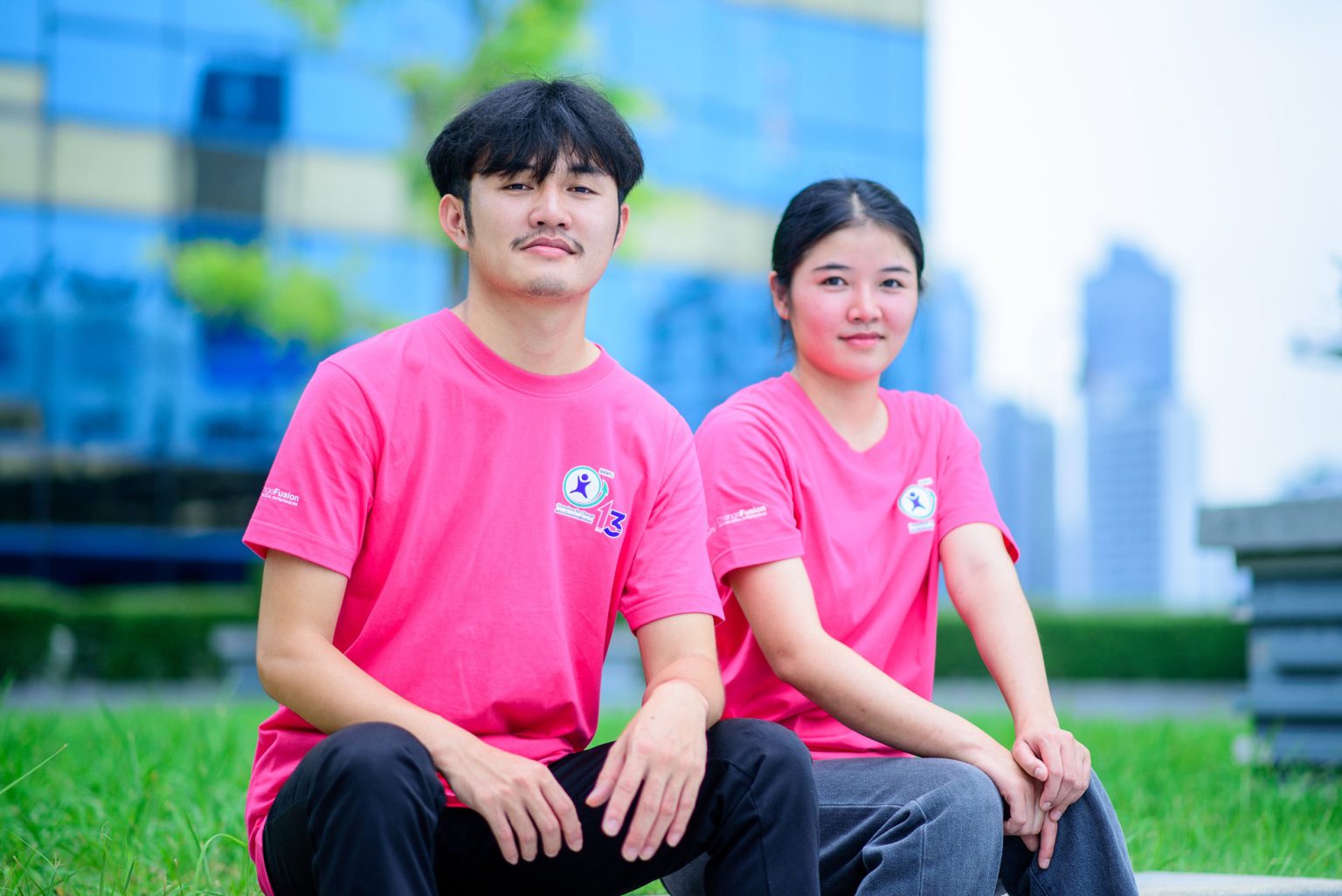
Banpu Supports “Karen Design”, a Social Enterprise Using “Karen Crafts” to Address “Forest Burning and Community Income Disparity”

Karen Design is one of three social enterprises awarded funding in the 13th Banpu Champions for Change (BC4C) program
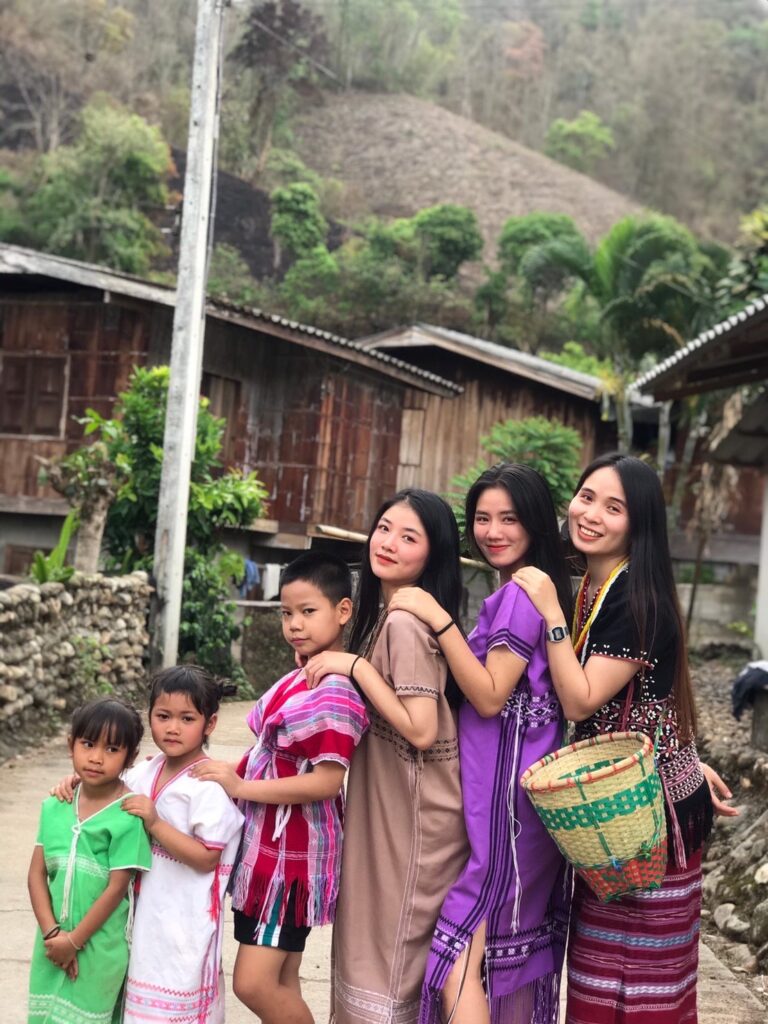
High on the mountains of Mae Hong Son province, the Mae Tho Noi community is home to the Karen ethnic group, who rely on corn farming as their main source of income. However, they are currently facing economic and environmental issues. Traditional corn farming methods cannot ensure income stability for the community, and the annual burning of agricultural fields leads to severe PM 2.5 air pollution.

Amidst these challenges, the Karen people’s way of life and traditional weaving knowledge have become a new source of inspiration for creating additional income for families. This inspiration led siblings Jeeraphan and Chunnawan Boonma, founders of the social enterprise “Karen Design,” to integrate the unique cultural heritage of the Karen people with contemporary design. Their efforts have resulted in two distinct styles of craftwork that beautifully combine tradition and modernity.
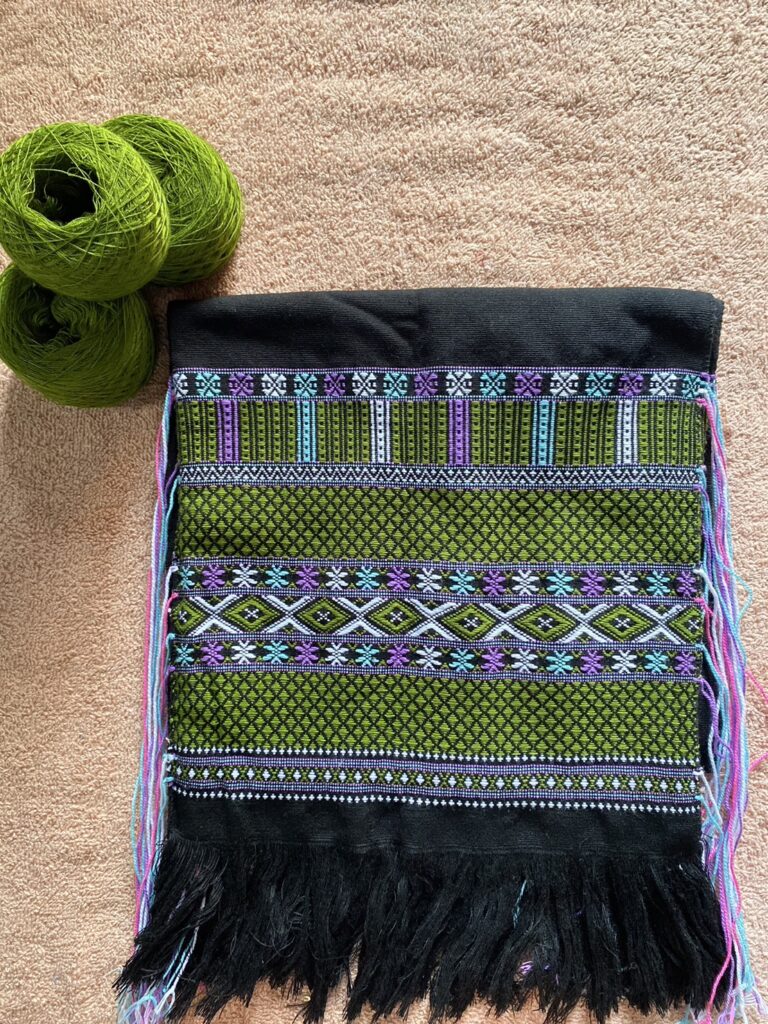
Traditional Karen woven fashion has been transformed into modern, everyday wearable pieces, blending tradition with contemporary style. Additionally, “corn husk lamps” are crafted from agricultural waste, turning discarded materials into unique and culturally inspired creations. After participating in the 13th year of the “Banpu Champions for Change” (BC4C), a program organized by Banpu Public Company Limited and the ChangeFusion Institute, the two siblings applied the two siblings leveraged their newfound knowledge to generate a six-figure revenue and significantly expand income distribution within their community within less than one year.
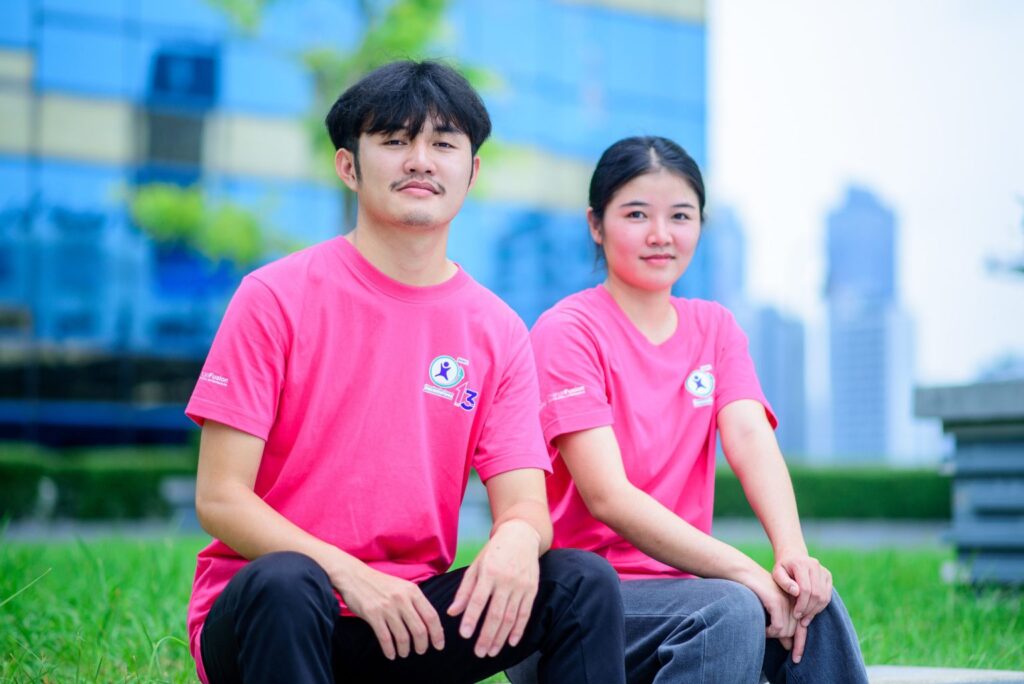
  • Creating “New Livelihoods” with “Karen Crafts”

Jeeraphan and Chunnawan Boonma, the siblings behind Karen Design, explain the origins of their venture, stating, “Karen Design was established from the economic struggles of the Mae Tho Noi community in Mae Hong Son province, where the main livelihood options were limited to cultivating corn and other grains on the mountain slopes. The community faced difficulties in accessing basic resources, such as no electricity during the rainy season, unstable phone signals, and challenging transportation due to the remote location. However, the desire for change in our village motivated us to look for new opportunities. We decided to revive the often-overlooked traditional craft of Karen weaving and adapt it to the modern lifestyle, making it suitable for daily wear, rather than only for important ceremonies like weddings. Recognizing this potential, we expanded our network by forming a collective of local women artisans, offering a wider range of products such as shirts, dresses, bags, and more. Additionally, we created added value by transforming agricultural waste, like corn husks, into modern, minimalist-style decorative lamps, appealing to those who love decorating their homes with natural materials.”
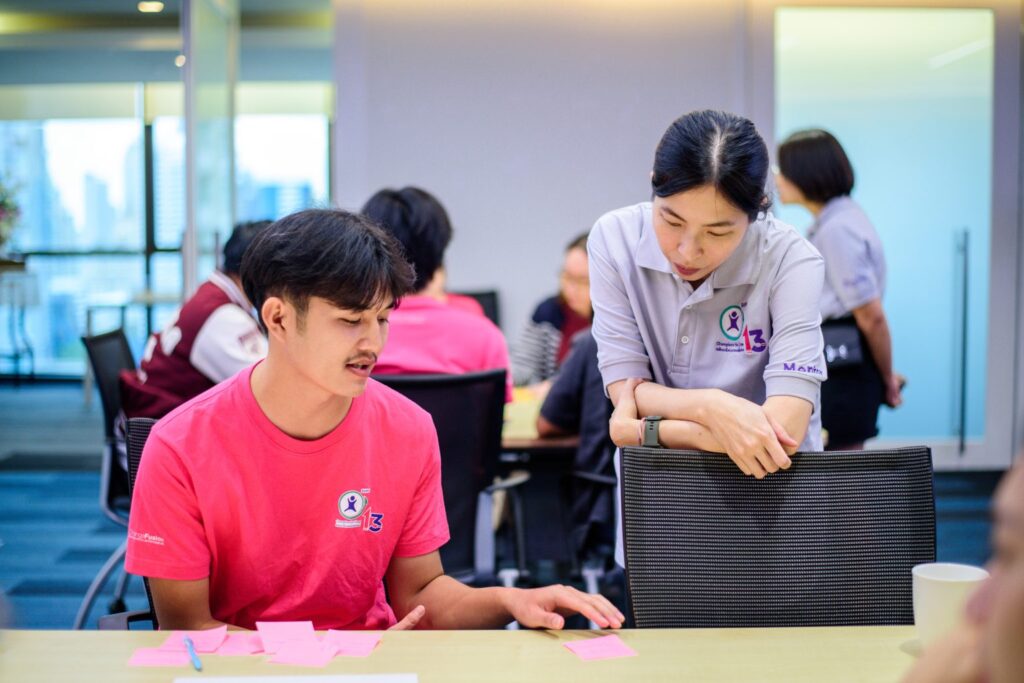
  • Generating a “Six-Figure Revenue” Through “Knowledge and Funding” from the Banpu Champions for Change Program

“Participating in the Banpu Champions for Change program provided us with invaluable opportunities and inspiration from fellow social entrepreneurs, senior mentors, the advisory committee, and expert consultants, all of whom provided close guidance. This support helped us solidify our business strategy and set clearer goals. We began by calculating costs, determining appropriate pricing, and carefully studying customer behavior and demand. With the THB 80,000 grant from the program, we focused on online sales, especially through TikTok, which proved to be an effective way to quickly reach our target customers. This approach led to nearly THB 250,000 in total sales across both product categories. We received more than 200 orders for Karen woven garments, generating between THB 2,000 and THB 5,000 in monthly income for community members. Additionally, more than 80 corn husk lamps were ordered, providing an average monthly income of THB 1,500 per person,” added Jeeraphan.

  • Converting “Half of Cornfields” to “Fruit Trees and Other Cash Crops” for Sustainability

Karen Design focuses not only on community economic development but also on environmental restoration. The initiative encourages villagers to reduce corn cultivation and replace it with fruit trees, other economic crops, and native tree species. To date, the community has managed to reduce corn farming by more than 50%, converting approximately 195 rai out of 390 rai of land. This shift helps decrease the practice of burning forest, promotes agricultural diversity, and contributes to a more sustainable future. Additionally, Karen Design plans to expand its production to other communities in response to growing demand. Importantly, the THB 250,000 grant received as one of the three winners of the BC4C program has been used to improve their production system, ensuring continuous income generation for community members.

  • Banpu Fosters the Next Generation of Social Entrepreneurs
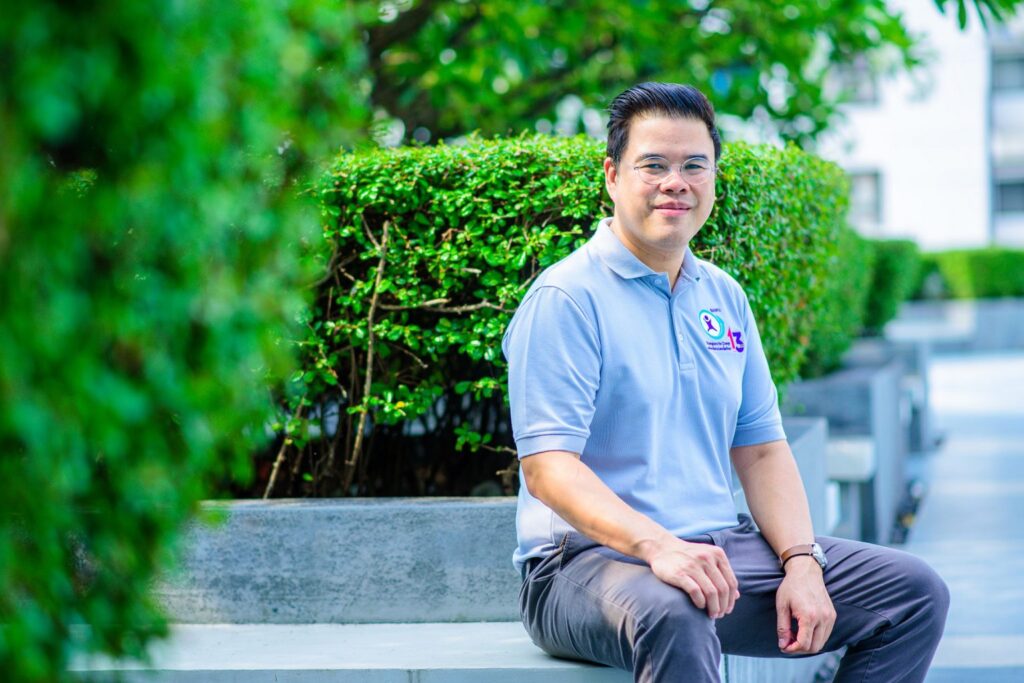
Rattapon Sukhunthee, Head of Corporate Communications at Banpu Public Company Limited, shared thoughts on the BC4C program, stating that ” At Banpu, we admire the passion of social entrepreneurs dedicated to environmental protection and leading their communities toward sustainable development. Karen Design demonstrates remarkable determination and resilience, effectively leveraging the skills learned from the program to enhance their business model and create a tangible impact, supported by clear metrics. We hope that Karen Design inspires other aspiring social entrepreneurs. Banpu remains committed to strengthening Thailand’s social enterprise ecosystem in partnership with our network, and we will soon be accepting applications for the 14th year of the BC4C program in 2025. Interested social entrepreneurs can follow the Banpu Champions for Change page for updates.”

Interested in Karen Design products? Find them on:

TikTok: https://www.tiktok.com/@kate_jee24?is_from_webapp=1&sender_device=pc
Facebook:  https://www.facebook.com/profile.php?id=100076218292843

Stay updated on the Banpu Champions for Change (BC4C) program and the application process for its 14th year in 2025 by following the Facebook page:

https://www.facebook.com/banpuchampions/

###

About Banpu

Banpu Public Company Limited is a leading versatile energy provider, operating 3 core groups of businesses – energy resources, energy generation, and energy technology in Thailand, Indonesia, China, Australia, Lao PDR, Mongolia, Japan, the United States of America and Vietnam. The Company is committed to developing sustainable energy solutions, balancing the Energy Trilemma while striving to achieve Net Zero emissions by 2050.

Tags :
For more information,
Please contact Banpu Corporate
Communications Team:
Kamolwan Chiamudom

093-923-6355

kamolwan_c@banpu.co.th

Chattida Veerakul

099-104-4999

chattida_v@banpu.co.th

Solar Farm
Ponder Solar Farm
Texas

Operational

Capacity
(1Q26)

2.5
MW
Banpu Ownership : 100%
Gas-fired Power Plant (HELE/CCGT)
Temple I CCGT Power Plant
Texas

Operational

Installed
capacity
(1Q26)

768
MW
Banpu Ownership : 100%
Temple II CCGT Power Plant
Texas

Operational

Installed
capacity
(1Q26)

755
MW
Banpu Ownership : 100%
Shale Gas Site
Marcellus Shale
Pennsylvania

Operational

Reserves
(2025)

0.6
Tcfe 1P reserves
Banpu Ownership : 65.94%
Barnett Shale
Texas

Operational

Reserves
(2025)

5.5
Tcfe 1P reserves
Banpu Ownership : 65.94%
CCUS Project
Barnett Zero Project
Texas

Operational

Annual CO2
storage capacity
(2025)

183,000
t/yr
Cotton Cove Project
Texas

Operational

Annual CO2
storage capacity
(2025)

32,000
t/yr
CCUS Project
Eagle Ford Project
Southern Texas

Under Development

Annual CO2
storage capacity
(2025)

~90,000
t/yr
East Texas Project
Eastern Texas

Under Development

Annual CO2
storage capacity
(2025)

~70,000
t/yr
BESS Project
Megamouth BESS
Texas

Under Development

Capacity
(2025)

100
MW
200
MWh
Banpu Ownership : 100%
BESS Project
Iwate Tono BESS
Iwate

Operational

Capacity
(1Q26)

15
MW
58
MWh
Banpu Ownership : 75%
BESS Project
Aizu BESS
Fukushima

Under Development

Capacity
(2025)

26
MW
104
MWh
Banpu Ownership : 100%
Tsuno BESS
Miyazaki

Under Development

Capacity
(2025)

26
MW
104
MWh
Banpu Ownership : 70%
Kamigumi-Tokyo BESS
Tokyo

Under Development

Capacity
(2025)

2
MW
8
MWh
Banpu Ownership : 49%
Nikko BESS
Tochigi ​

Under Development

Capacity
(2025)

40
MW
160
MWh
Banpu Ownership : 100%
Hiyoshibaru BESS
Oita​

Under Development

Capacity
(2025)

20
MW
80
MWh
Banpu Ownership : 30%
Solar Power Plant
Olympia Solar
Gunma, Ibaraki and Tochigi

Operational

Capacity
(1Q26)

10
MW
Banpu Ownership : 40%
Yamagata Solar​
Yamagata

Operational

Capacity
(1Q26)

20
MW
Banpu Ownership : 100%
Kesennuma Solar
Miyagi

Operational

Capacity
(1Q26)

20
MW
Banpu Ownership : 100%
Shirakawa Solar​
Fukushima

Operational

Capacity
(1Q26)

10
MW
Banpu Ownership : 100%
Wind Project
Vinh Chau – Phase 1
Soc Trang Province

Under Development

Capacity
(2025)

30
MW
Banpu Ownership : 100%
Solar Power Plant
Nhon Hai Solar
Ninh Thuan Province

Operational

Capacity
(1Q26)

35
MW
Banpu Ownership : 100%
Wind Power Plant
El Wind Mui Dinh
Ninh Thuan Province

Operational

Capacity
(1Q26)

37.60
MW
Banpu Ownership : 100%
Coal Mine
Tsant Uul Mine
South Gobi Province

Operational

Production
(1Q26)

0.57
Mt

Reserves
(2025)

~63.5
Mt
Banpu Ownership : 100%
Coal Project
Unst Khudag Project
Central Gobi Province

Under Development

Reserves
(2025)

540.9
Mt
Banpu Ownership : 100%
Solar Farm
Beryl Solar Farm (BSF)
New South Wales

Operational

Capacity
(1Q26)

110.9
MW
Banpu Ownership : 100%
Manildra Solar Farm (MSF)
New South Wales

Operational

Capacity
(1Q26)

55.9
MW
Banpu Ownership : 100%
Port
NCIG Coal Terminal Port (Newcastle)

Operational

Coal export loading

Coal Mine
Airly Mine
New South Wales

Operational

Production
(1Q26)

0.1
Mt

Reserves
(2025)

13.5
Mt
Banpu Ownership : 100%
Springvale Mine
New South Wales

Operational

Production
(1Q26)

0.7
Mt

Reserves
(2025)

5.3
Mt
Banpu Ownership : 100%
Clarence Mine
New South Wales

Operational

Production
(1Q26)

0.3
Mt

Reserves
(2025)

24.7
Mt
Banpu Ownership : 100%
Mandalong Mine
New South Wales

Operational

Production
(1Q26)

0.5
Mt

Reserves
(2025)

43.9
Mt
Banpu Ownership : 100%
Myuna Mine
New South Wales

Operational

Production
(1Q26)

0.2
Mt

Reserves
(2025)

11.5
Mt
Banpu Ownership : 100%
Angus Place Mine
New South Wales

Care & Maintenance

On care & maintenance

Banpu Ownership : 100%
BESS Project
Wooreen BESS (WESS)
Latrobe Valley

Under Development

Capacity
(2025)

350
MW
1,400
MWh
Banpu Ownership : 50%
Kerang BESS
Latrobe Valley

Under Development

Capacity
(2025)

103
MW
206
MWh
Banpu Ownership : 100%
Coal Project
Newstan Extension Project
New South Wales

Under Development

Reserves
(2025)

51.5
Mt
Banpu Ownership : 100%
Neubecks Mine Project
New South Wales

Under Development

Reserves
(2025)

7.5
Mt
Banpu Ownership : 100%
Wallarah Mine Project
New South Wales

Under Development

Reserves
(2025)

7.8
Mt (equity basis)​
Banpu Ownership : 13.5%
Port
Bontang Coal Terminal
+ 4 ports

Operational

Export loading facility

Coal Project
NPR Mine Project
Central Kalimantan

Under Development

Reserves
(pre-development)

77.4
Mt
Banpu Ownership : 65.14%
Coal Mine
Indominco Mine
East Kalimantan

Operational

Production
(1Q26)

1.6
Mt

Reserves
(2025)

30.4
Mt
Banpu Ownership : 65.14%
Trubaindo Mine
East Kalimantan

Operational

Production
(1Q26)

0.7
Mt

Reserves
(2025)

50.2
Mt
Banpu Ownership : 65.14%
Bharinto Mine
North Barito

Operational

Production
(1Q26)

1.7
Mt

Reserves
(2025)

95.4
Mt
Banpu Ownership : 65.14%
Jorong Mine
South Kalimantan

Operational

Reserves
(2025)

2.3
Mt
Banpu Ownership : 65.14%
Graha Panca Karsa Mine (GPK)
East Kalimantan

Operational

Production
(1Q26)

0.5
Mt

Reserves
(2025)

99.1
Mt
Banpu Ownership : 65.14%
TIS Mine
East Kalimantan

Operational

Production
(1Q26)

0.1
Mt

Reserves
(2025)

7.2
Mt
Banpu Ownership : 65.14%
NPR Mine

Operational

Production
(1Q26)

0.1
Mt

Reserves
(2025)

77.4
Mt
Banpu Ownership : 65.14%
Thermal Power Plant
Hongsa Power Plant – HPC
Xayaboury Province

Operational

Installed Capacity
(1Q26)

1,878
MW
Banpu Ownership : 40%
Thermal Power Plant
BLCP Power Plant
Rayong Province

Operational

Installed Capacity
(1Q26)

1,434
MW
Banpu Ownership : 50%
Solar Project
Jinhu Qianfeng Solar
Jiangsu Province

Under Development

Capacity
(2025)

120
MW
Banpu Ownership : 10%
BESS Project
Jinhu Qianfeng BESS
Jiangsu Province

Under Development

Capacity
(2025)

10
MW
20
MWh
Banpu Ownership : 100%
Thermal Power Plants
Luannan CHP
Hebei Province

Operational

Capacity
(1Q26)

246
MW

Steam
(1Q26)

538
t/hr​
Banpu Ownership : 100%
Zhengding CHP
Hebei Province

Operational

Capacity
(1Q26)

139
MW

Steam
(1Q26)

370
t/hr​
Banpu Ownership : 100%
Zouping CHP
Shandong Province

Operational

Capacity
(1Q26)

223
MW

Steam
(1Q26)

600
t/hr​
Banpu Ownership : 70%
Shanxi Lu Guang (SLG) Power Plant​
Shanxi Province

Operational

Capacity
(1Q26)

1,320
MW
Banpu Ownership : 30%
Solar Power Plant
Huineng Solar
Shandong Province

Operational

Capacity
(1Q26)

21.51
MW
Banpu Ownership : 100%
Jinshan Solar
Shandong Province

Operational

Capacity
(1Q26)

28.95
MW
Banpu Ownership : 100%
Haoyuan Solar
Shandong Province

Operational

Capacity
(1Q26)

20.00
MW
Banpu Ownership : 100%
Hui'en Solar
Shandong Province

Operational

Capacity
(1Q26)

19.70
MW
Banpu Ownership : 100%
Deyuan Solar
Zhejiang Province

Operational

Capacity
(1Q26)

51.64
MW
Banpu Ownership : 100%
Xingyu Solar
Shandong Province

Operational

Capacity
(1Q26)

10.30
MW
Banpu Ownership : 100%
Jixin Solar
Jiangsu Province

Operational

Capacity
(1Q26)

25.22
MW
Banpu Ownership : 100%
Coal Mine
Gaohe Mine
Shanxi Province

Operational

Production
(1Q26)

2.6
Mt

Reserves
(2025)

72.9
Mt
Banpu Ownership : 45%
Hebi Mine
Henan Province

Operational

Production
(1Q26)

0.3
Mt

Reserves
(2025)

40.6
Mt
Banpu Ownership : 40%

IR Contacts