

“Creating sustainable change does not begin with funding alone. It begins with investing in people. When people are equipped with the right capabilities, they, in turn, can create positive change for society.”
This is the perspective shared by Mr.Rattapon Sukhunthee, Head of Corporate Communications at Banpu Public Company Limited, during The Business of Sustainability session at SUSTRENDS 2027. On stage, he shared Banpu’s vision and reflected on the lessons learned from 15 years of working alongside social entrepreneurs through the Banpu Champions for Change (BC4C) project. He also encouraged the business sector to recognize its role in building an ecosystem that enables people and communities to thrive, emphasizing that developing people’s potential is the fundamental building block of true sustainability.
The Evolution of BC4C in Response to a Changing World
Fifteen years ago, the concept of Social Enterprise was still relatively new in Thailand. At the time, businesses were primarily viewed as engines of economic growth and profit generation, while addressing social challenges was largely considered the responsibility of the government and non-profit organizations. This prompted Banpu to ask a fundamental question: “Can businesses become part of the solution to social challenges? And how can positive change continue without relying solely on charitable donations?”
This question led to the launch of the Banpu Champions for Change (BC4C) program in 2011, in partnership with ChangeFusion, to nurture social entrepreneurs who leverage business as a mechanism for creating positive social impact. The program was founded on the belief that when social entrepreneurs are equipped with the capabilities to build sustainable businesses, they can, in turn, create opportunities for individuals, communities, and the nation.
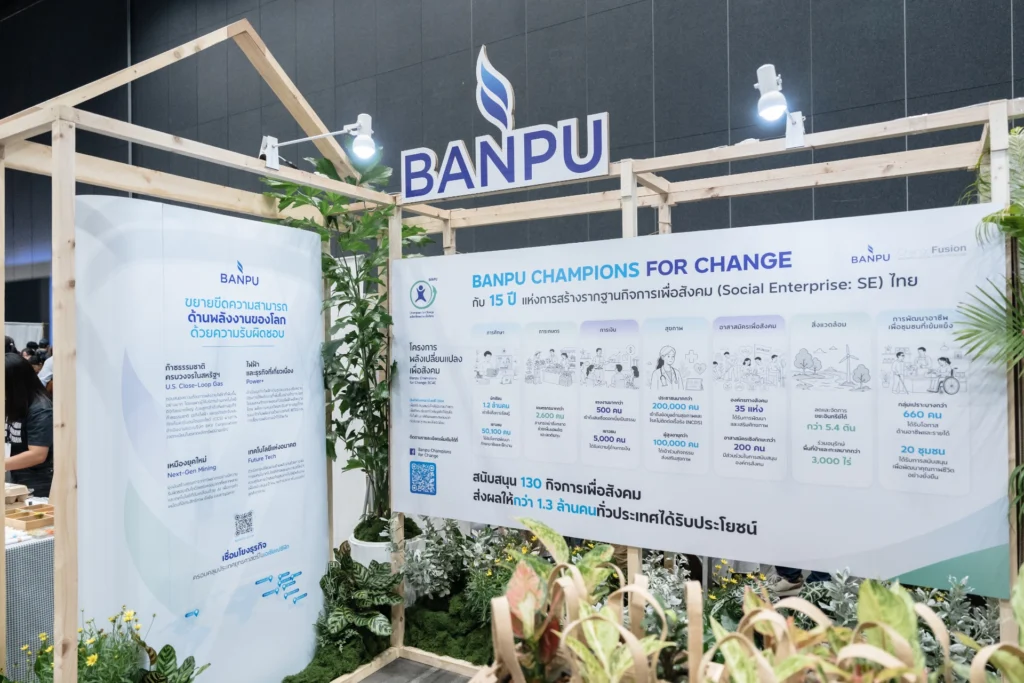
Over the past 15 years, the program has continuously evolved in line with the development of the social enterprise ecosystem and the changing business landscape. Originally focused on incubating early-stage social entrepreneurs, BC4C has expanded its role to become a springboard that connects entrepreneurs with knowledge, experts, networks, strategic partners, and business opportunities. Through these connections, the program enables social enterprises to scale their impact, gain market access, and achieve sustainable growth. This evolution reflects Banpu’s belief that: “Capital may help start a business, but opportunities and a strong ecosystem are what enable a business to grow.”

Three Lessons That Go Beyond Social Enterprises
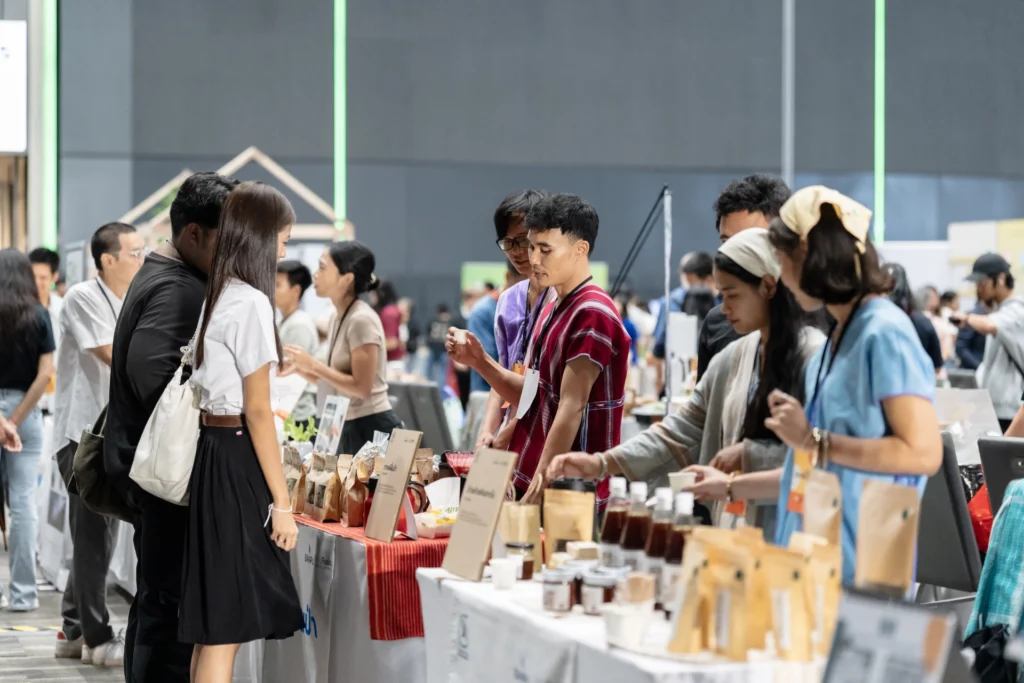
Drawing on 15 years of experience working with more than 130 social enterprises, Banpu has identified three key lessons that entrepreneurs across all sectors can apply to achieve sustainable growth. These lessons are reflected through real-life case studies that demonstrate how these principles have translated into tangible outcomes.
Lesson 1: Sustainable Competitive Advantage Lies Not in Innovation, but in the Value a Business Creates for People
In a world where technology is increasingly accessible, knowledge is readily available, and innovations can be replicated rapidly, being the first to innovate is no longer a sustainable competitive advantage. The more important question is: What value does a business create, and how meaningful is that value to people? For this reason, Banpu Champions for Change does not simply seek businesses with innovative ideas. Instead, it supports entrepreneurs in defining a compelling value proposition that connects business value with social value, enabling them to grow their businesses without losing sight of the purpose they set out to achieve.
Bhukram (BC4C#11) clearly reflects this lesson. The enterprise transformed traditional local cotton embroidery into contemporary products, earning market recognition and inspiring other producers to adopt and build upon the concept. As artisans within its network developed greater craftsmanship, some began accepting work from other brands or establishing their own businesses. What seemed to be a challenge instead prompted the founder to ask a new question: Was the purpose of the business to increase sales, or to improve the quality of life of the people within the network? This led Bhukram to shift its focus from expanding the number of artisans to caring for the people within its network through fair distribution of work, creating sufficient income opportunities, and supporting artisans in gaining recognition as artists, rather than simply contract manufacturers.
Lesson 2: A Deep Understanding of Problems Is a Competitive Advantage That AI Cannot Replace
Today, everyone has access to information, AI technologies, and business tools at a similar level. However, what cannot be readily replicated is the deep insight gained through field immersion, working closely with people, and experiencing real-world challenges firsthand. Therefore, the competitive advantage of a social enterprise does not necessarily lie in having the most information, but in having a profound understanding of the context of the problem and the ability to translate that understanding into solutions that genuinely address people’s needs.
Khiri Farm (BC4C#12) exemplifies this lesson by looking beyond what appears on the surface. Rather than viewing post-harvest rice straw burning as a result of a lack of environmental awareness, the founder discovered that the root cause was that farmers did not recognize the economic value of agricultural residues such as rice straw. Khiri Farm therefore developed a business model that purchases rice straw that would otherwise have been burned and uses it as raw material for straw mushroom cultivation, transforming agricultural waste into a source of income and further developing it into a community business generating hundreds of thousands of baht in monthly revenue. When economic incentives changed, people’s behavior changed accordingly. This demonstrates how market mechanisms can be leveraged to address environmental challenges, without having to begin by asking people to make sacrifices.
Lesson 3: Businesses Overcome Crises When Their Teams Are Ready to Learn and Adapt
No entrepreneur succeeds from day one. Every business inevitably faces setbacks, uncertainty, and challenges that could never have been anticipated. Therefore, the role of BC4C is not to determine which path entrepreneurs should take, but to serve as a “mirror” that helps them see their own potential, strengths, weaknesses, and opportunities more clearly. The program may open doors, provide knowledge, and connect entrepreneurs with valuable networks, but ultimately, it is the entrepreneurs themselves who must decide to walk through those doors. The program’s ultimate goal is therefore not to build businesses that grow only in the short term, but to cultivate entrepreneurs who are able to learn, adapt, and continue growing—even after they have completed the program.
Local Alike (BC4C#2) clearly demonstrates the power of teams and networks. When the COVID-19 pandemic brought travel to a standstill and community tourism revenues almost completely disappeared, the team chose not to wait for the situation to return to normal. Instead, they launched Local A Lot, a platform connecting community products from across Thailand with consumers, and later expanded the concept through Local Aroi, bringing locally produced food and ingredients to online markets. What enabled Local Alike to adapt so quickly was not simply a new business idea, but the trust that had been built over many years among the team, local communities, and partner networks across the country. Ultimately, success is not defined by never encountering a crisis, but by people’s ability to learn, adapt, and discover new opportunities amid change.
The Greatest Return Is Not Measured by Profit, but by the People Who Grow with Us
Today, BC4C has supported more than 130 social enterprises. However, for Banpu, this number alone is not the measure of success. What matters more is the impact these entrepreneurs create for people and communities. The program’s Social Impact Assessment (SIA) shows that investing in these social entrepreneurs has generated positive impact for more than 1.3 million lives. From Banpu’s perspective, however, this figure is more than the number of beneficiaries—it represents 1.3 million opportunities created by ordinary people who chose to step forward and solve challenges within their own communities.
Mr. Rattapon concluded, “For Banpu, this program represents an investment in people. It is not only about developing their potential to achieve success, but about empowering each individual to grow to the point where they can create opportunities for others.”
###
About Banpu
Banpu Public Company Limited is a leading versatile energy company, operating across four business pillars under its Energy Symphonics Strategy: U.S. Closed-Loop Gas, Next-Gen Mining, Power+, and Future Tech – with operations in Thailand, Indonesia, China, Australia, Lao PDR, Mongolia, Japan, the United States of America, and Vietnam. The Company leads a responsible and sustainable energy transition by balancing reliable, affordable and sustainable energy.
For more information, please contact
Weber Shandwick (Thailand)
Chanamon Akaranuphapong (Joe) 062-415-9946 Chanamon@webershandwick.co.th